ADHD App • Mobile App Design 2025
ROLE
Product Designer & Builder
Designed the behavior model, AI logic, and front-end implementation
TIMELINE
Weekend Build
SCOPE
As a solo designer, I owned problem framing, behavior strategy, system logic, and front-end implementation from concept through a fully functional MVP
OVERVIEW
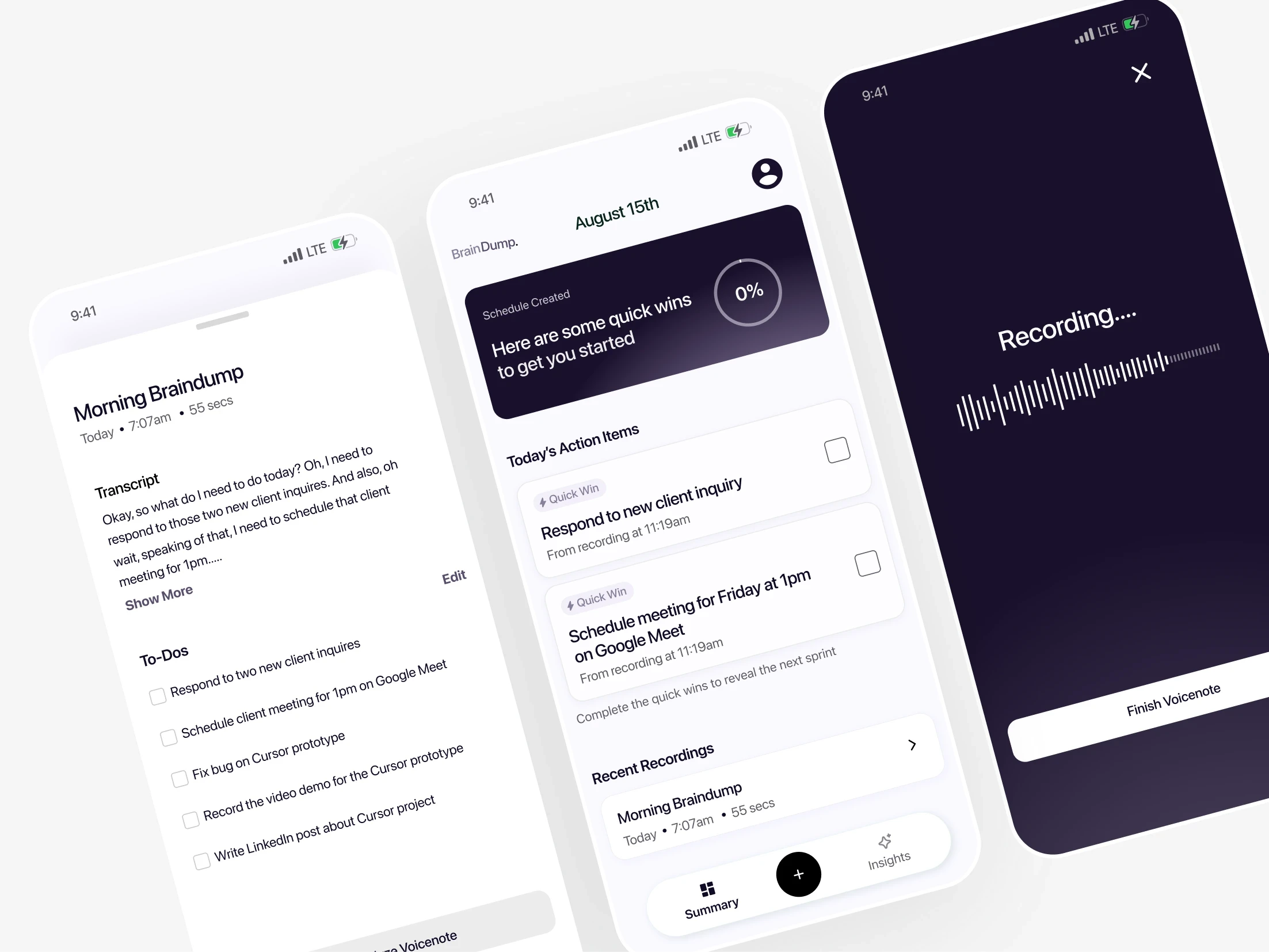
An AI-assisted task initiation system designed to reduce cognitive overload for users with ADHD
This project explores how AI and intentional constraints can support task initiation for people with ADHD, not by optimizing productivity, but by reducing the cognitive friction that prevents starting in the first place
This project was designed and built using React in Cursor and is actively used in my own workflow.
PROBLEM
Traditional to-do systems hinder focus instead of guiding it for users with ADHD
People with ADHD often struggle not with identifying what needs to be done, but with initiating action once tasks are visible.
Most task-management tools:
Surface long, unbounded lists
Encourage task accumulation over completion
Increase context switching
Reward starting tasks rather than finishing them
For me, this resulted in constant list-making with little forward progress.
SOLUTION
A voice-first task system that prioritizes starting vs planning
The app replaces manual list creation with a short voice recording, allowing users to externalize thoughts without structuring them in the moment. See the full video walkthrough below:
STRATEGY & DIRECTION
Grounding product strategy in real ADHD behavior patterns
The strategy for this product was informed by well-documented ADHD behavior patterns and lived experience, rather than generic productivity heuristics.
The following ADHD behavioral signals directly informed the product’s direction and system design:
This strategy treats ADHD as a cognitive load and initiation challenge, and designs support around real behavior rather than idealized habits
SYSTEM ARCHITECTURE
How the system determines task priority and grouping logic
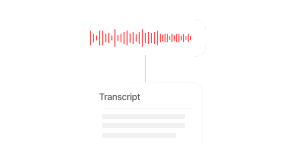
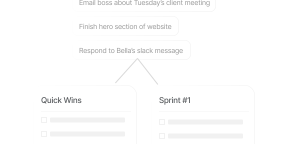
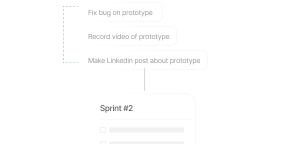
The system combines AI-based interpretation with deterministic heuristics to convert unstructured voice input into a small, ordered set of actionable tasks.
AI is used to extract and normalize intent, while product-defined rules control sequencing, grouping, and visibility
BEHAVIOR-DRIVEN EXPERIENCE FLOW
Designing an interface that adapts to user behavior over time
Rather than presenting a static task list, the experience responds to observed behavioral patterns, reducing cognitive load during overwhelm, lowering friction at initiation, and preserving momentum once action begins
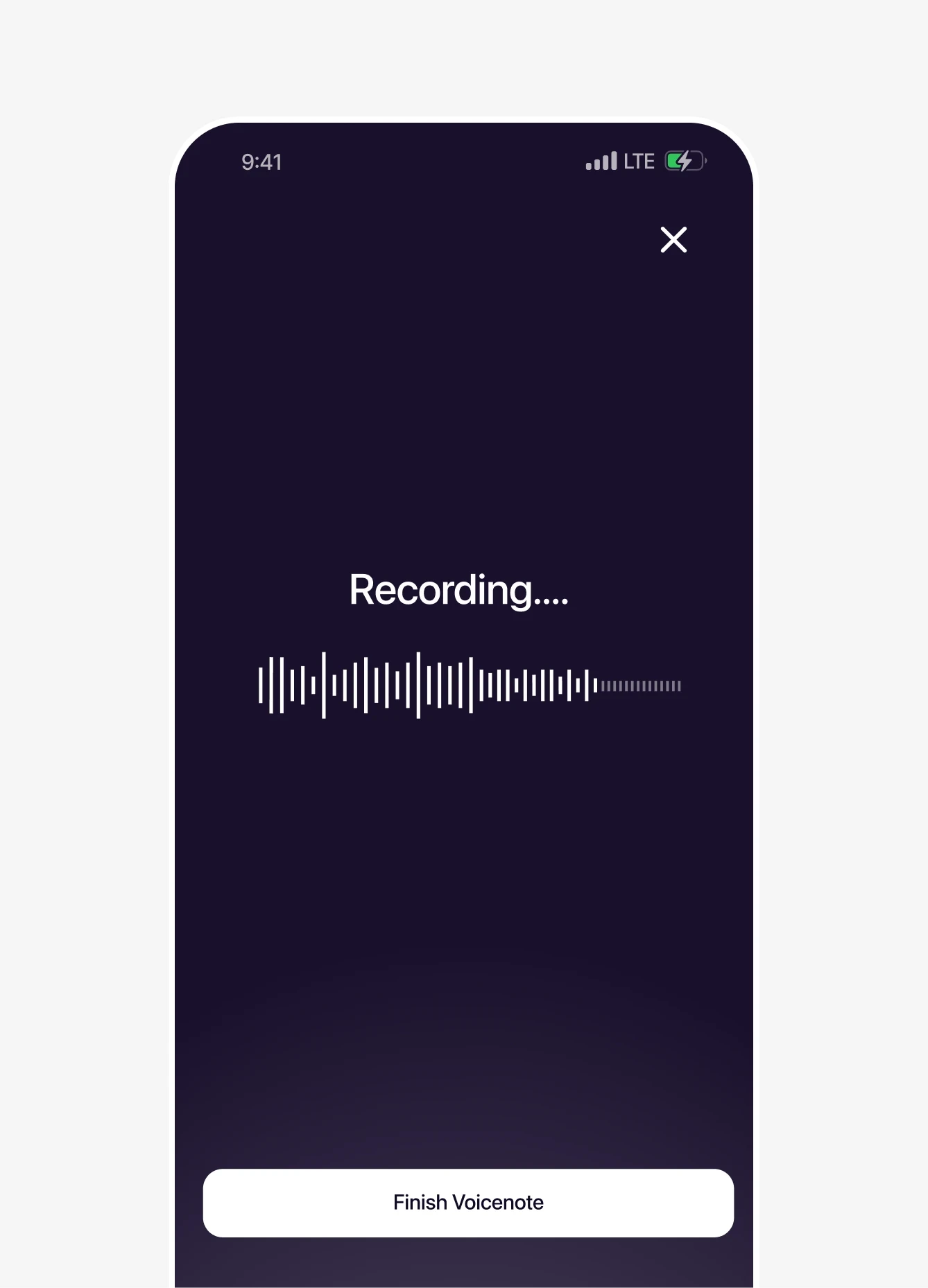
Overwhelm State: high cognitive load & unstructured thoughts
Current pain points
High cognitive load, unstructured thoughts, with multiple tasks competing for attention internally
Design response
The system begins with a voice-first “brain dump,” allowing users to externalize thoughts without organizing or prioritizing them in the moment
Initiation State: difficulty starting despite clear intent
Current pain points
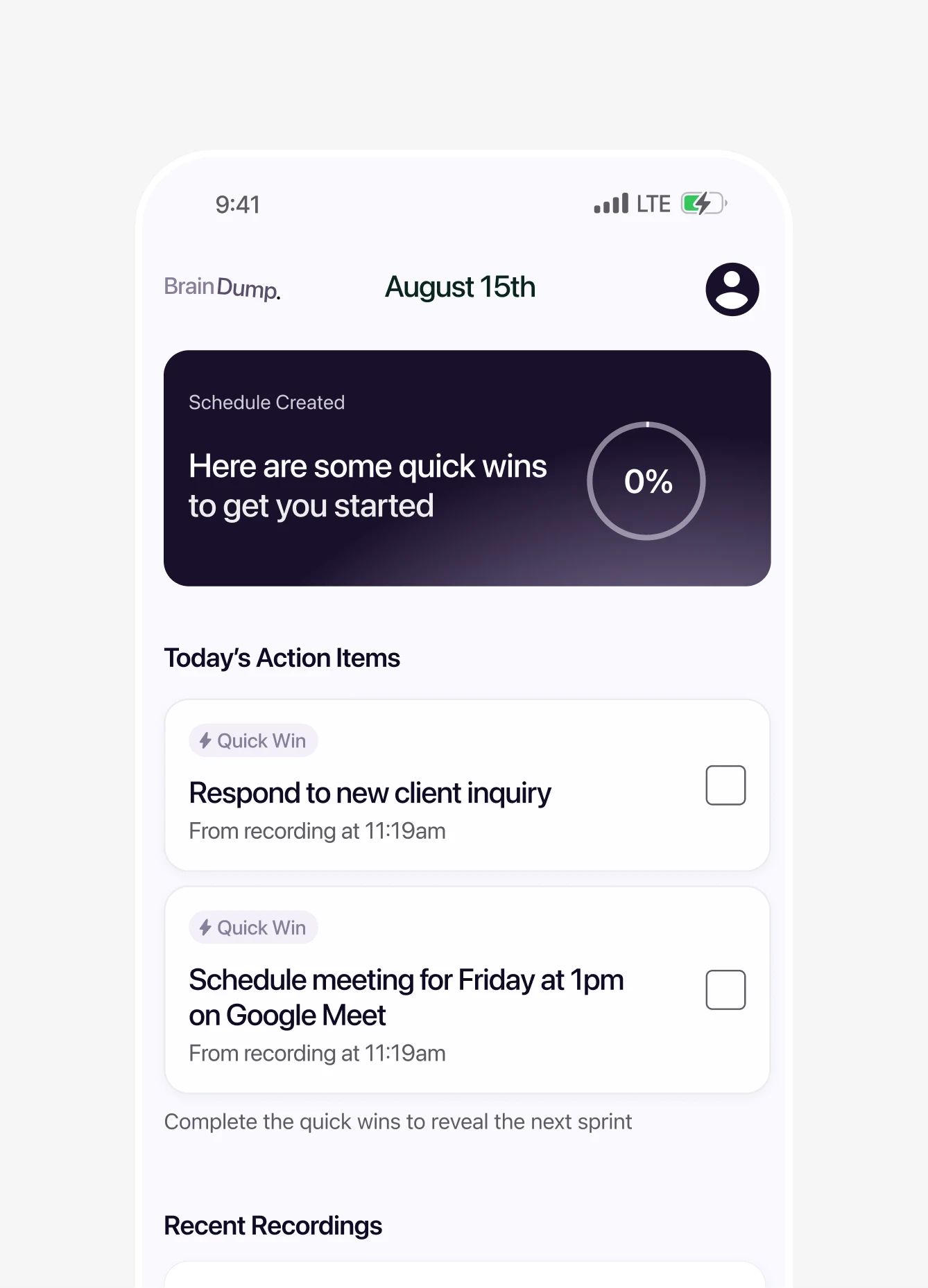
Even after identifying tasks, initiating action remains difficult when too many options are visible
Design response
The system surfaces only two low-effort “quick win” tasks and hides remaining items until initial actions are completed
Current pain points
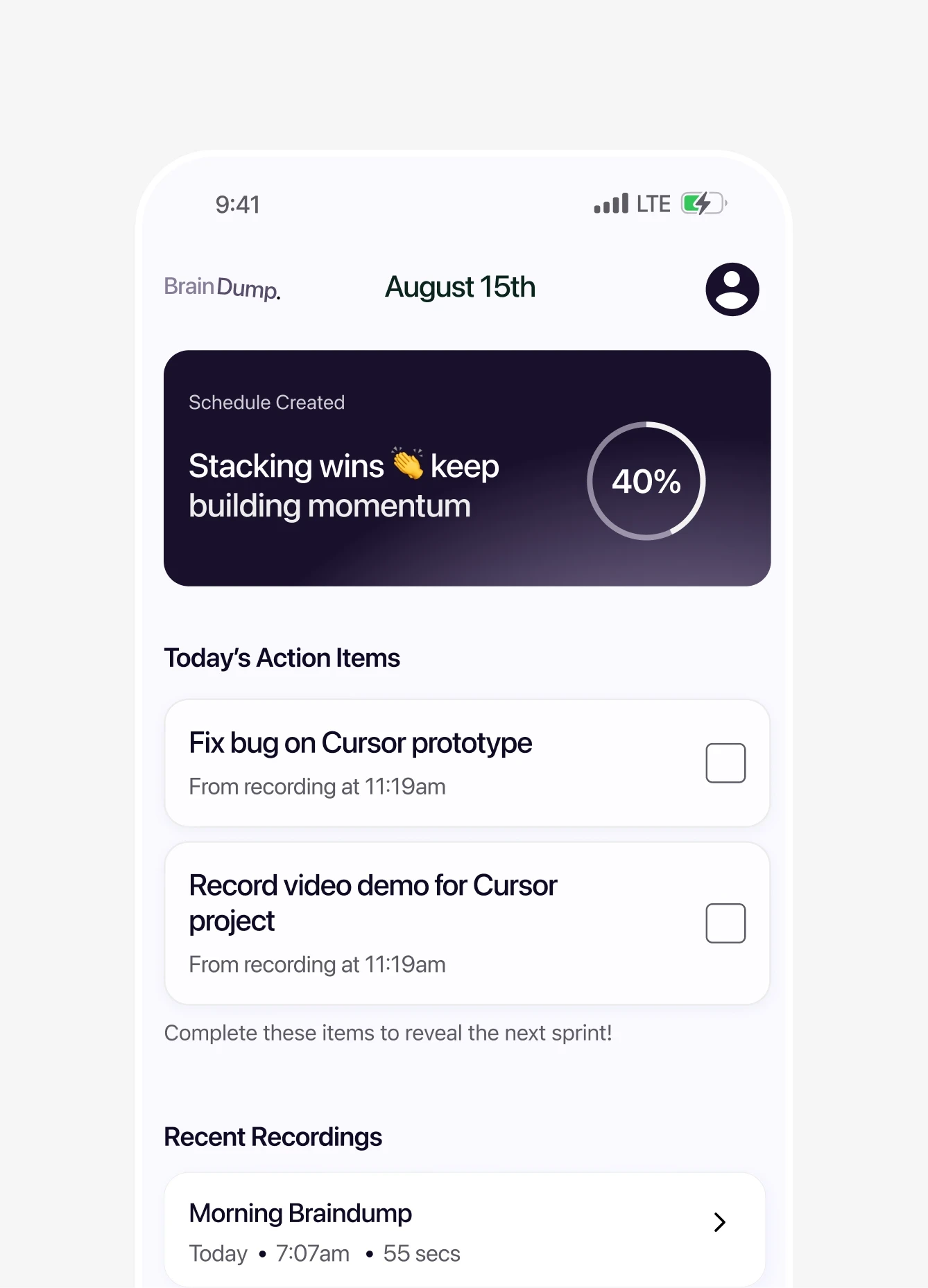
After starting, users are vulnerable to distraction or task switching, which can interrupt follow-through
Design response
DESIGN TO CODE
Figma components -> MCP -> React components
Design tokens and components were defined in Figma and transferred into Cursor using MCP, creating a shared system foundation between design and implementation.
I then refined the React components directly in code adjusting layout logic, spacing, and interaction states to match the intended design and behavior.
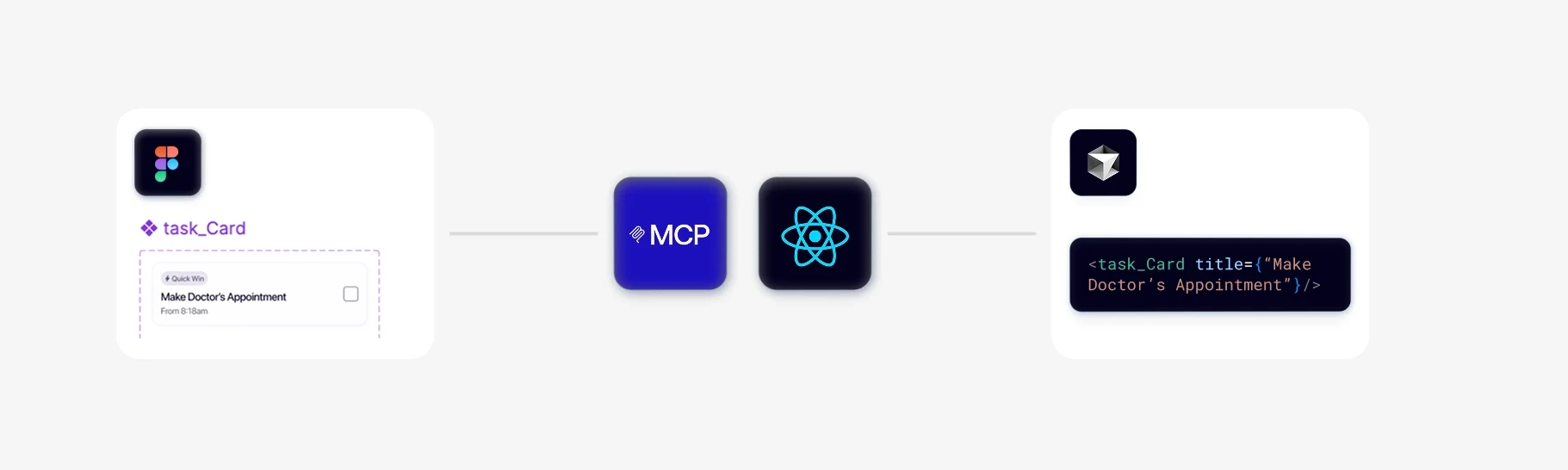
Figma MCP helped with design to code token transfer and setting up initial components. In order to match the visual style directly, I still needed to make manual code edits.
OUTCOMES
A fully functional, end-to-end system that I continue to use in my own workflow
Key Outcomes:
I use the app 2–3 times per week, particularly on days when focus is low
I start tasks faster and complete more of what I begin
I experience less overwhelm compared to traditional to-do lists
Unexpected Insight
Knowing that the system would extract and structure tasks from my voice note changed how I articulated my thoughts. The act of recording led me to be more concise and strategic in how I described my tasks, suggesting that capture alone can influence behavior