Redacted HealthTech Startup• Mobile App Design & Product Strategy 2025
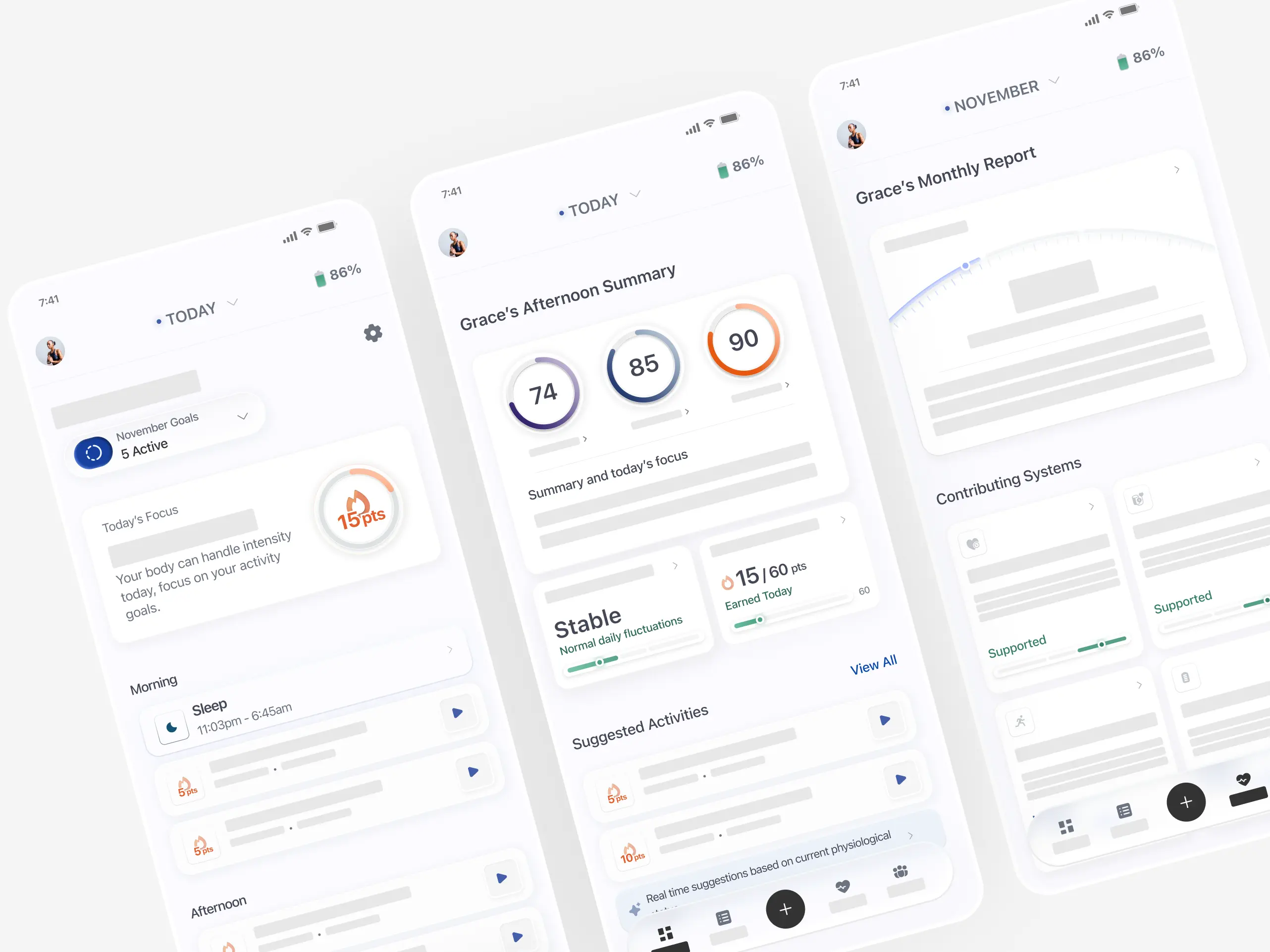
ROLE
Lead Product Designer & Strategist
TIMELINE
Q3 2024 - Q4 2025
SCOPE
Owned product definition, metric systems, MVP scope, and experience architecture from 0→1
OVERVIEW
Turning complex physiological data into a clear consumer product
I joined at the earliest phase to turn a clinically sensitive wearable dataset into a consumer experience people could understand and use safely.
My responsibility extended beyond interface design. I defined:
What information belonged in the product
How signals should be structured for consumer understanding
How the experience should scale as more signals are introduced
The outcome was a clear product model and design system that guided V1 build decisions, internal alignment, and investor storytelling
Confidentiality note: This case study is shared with client approval. To respect the NDA, product names, specific metrics, and proprietary visuals are generalized. I can share deeper detail (screens, flows, and rationale) in an interview.
PROBLEM
A powerful wearable dataset existed, but there was no structure for how it should become a product
The wearable could generate a large number of physiological signals, but there was no product strategy for:
What the consumer should see
What mattered most
How signals should be organized
What made this product different in a crowded wearable market
The risk wasn’t missing features, it was shipping a dashboard full of metrics that had no product logic behind them
The core design challenge: define a consumer-friendly structure that preserves clinical seriousness while preventing misinterpretation
STRATEGY & DIRECTION
From performance tracking to preventative health
Before designing screens, I led a short product framing phase to ensure the experience direction matched the type of data and long-term product goals. This phase included:
This framing work led to a clear positioning shift:
The product should behave like a preventive health guidance system, not a performance tracker.
SYSTEM ARCHITECTURE
From raw health data to a preventive health framework
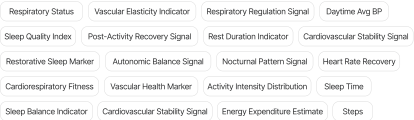
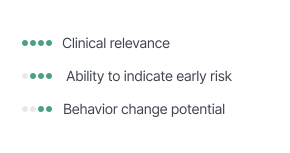
The device surfaced 40+ potential metrics. Before any UI design, I needed to determine which signals belonged in a consumer product and how they should be structured.
STEP THREE
Organized by time horizon to shape the scoring system
The final 18 prioritized signals were grouped by time horizon to shape the scoring system and overall experience
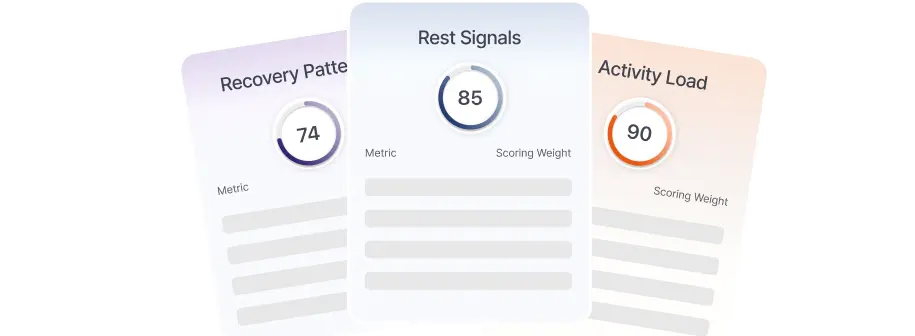
a) Short-term metrics (daily health signals)
Help users understand today at a glance (high-level and contextual)
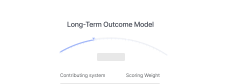
b) Long-term metrics
Show whether behaviors are improving health trajectory over time (trend-based and less reactive)
PROTOTYPING & TESTING
Validating the Experience in Code
To evaluate whether the information architecture truly worked as a product, not just a diagram, I translated the core structure into a lightweight coded prototype using Cursor.
This surfaced issues early that static mockups didn’t reveal:
Users wouldn’t know which information was “status” versus “trend”
Multiple sections competed for attention, making the core value unclear
The layout placed too much emphasis on day-to-day status when our purpose was to make this a preventative tool
Catching these early let me adjust hierarchy, navigation, and disclosure before investing in high-fidelity UI.
DESIGN DECISIONS
The Full Experience: 3 Layers of Health
Rather than collapsing everything into a single dashboard or score, I structured the experience around three layers, each answering a different user question
Daily Awareness → Guided Action → Long-Term Prevention
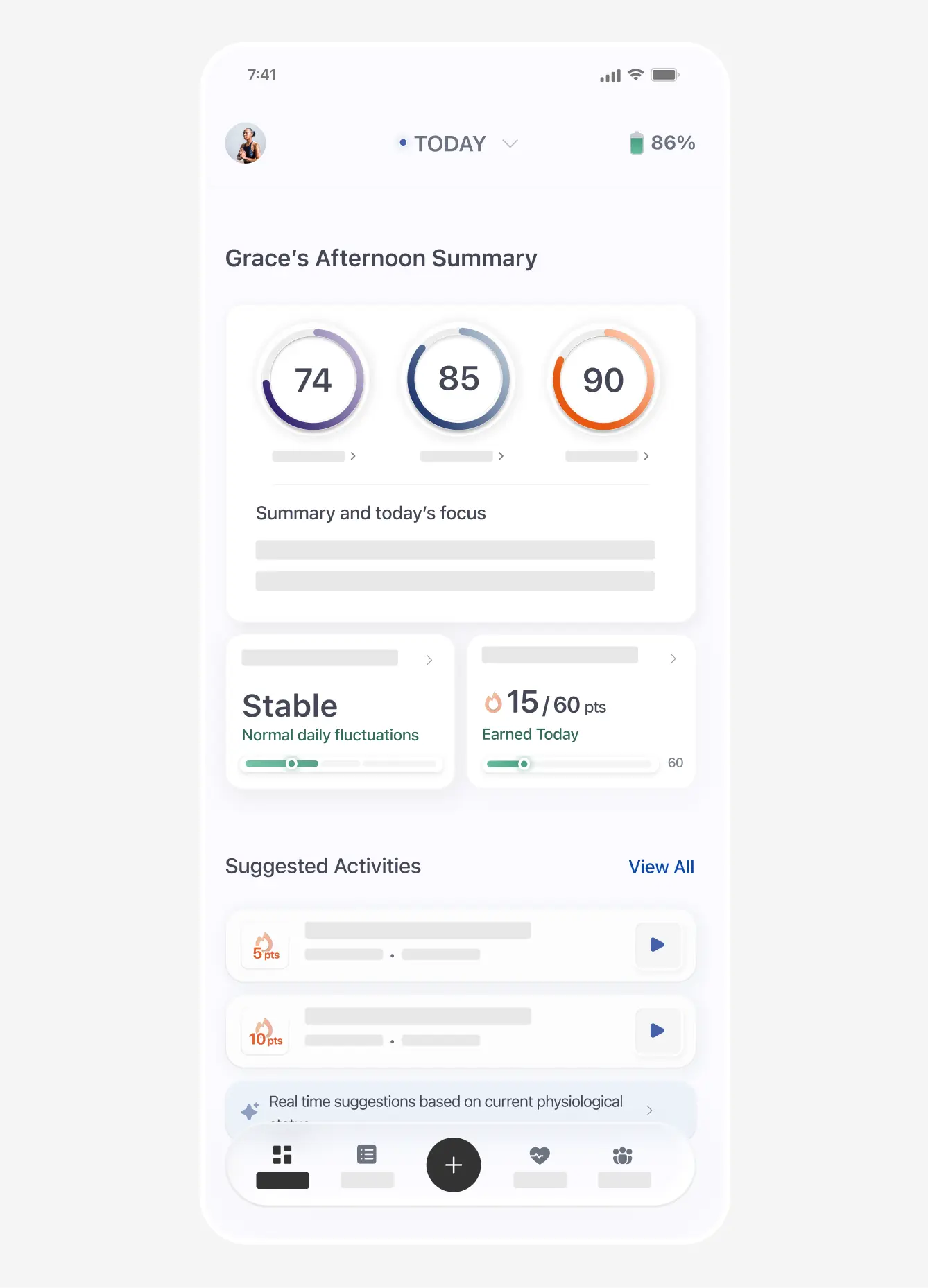
#1: Daily Awareness
Helps users quickly understand their current physiological state without overanalyzing short-term data
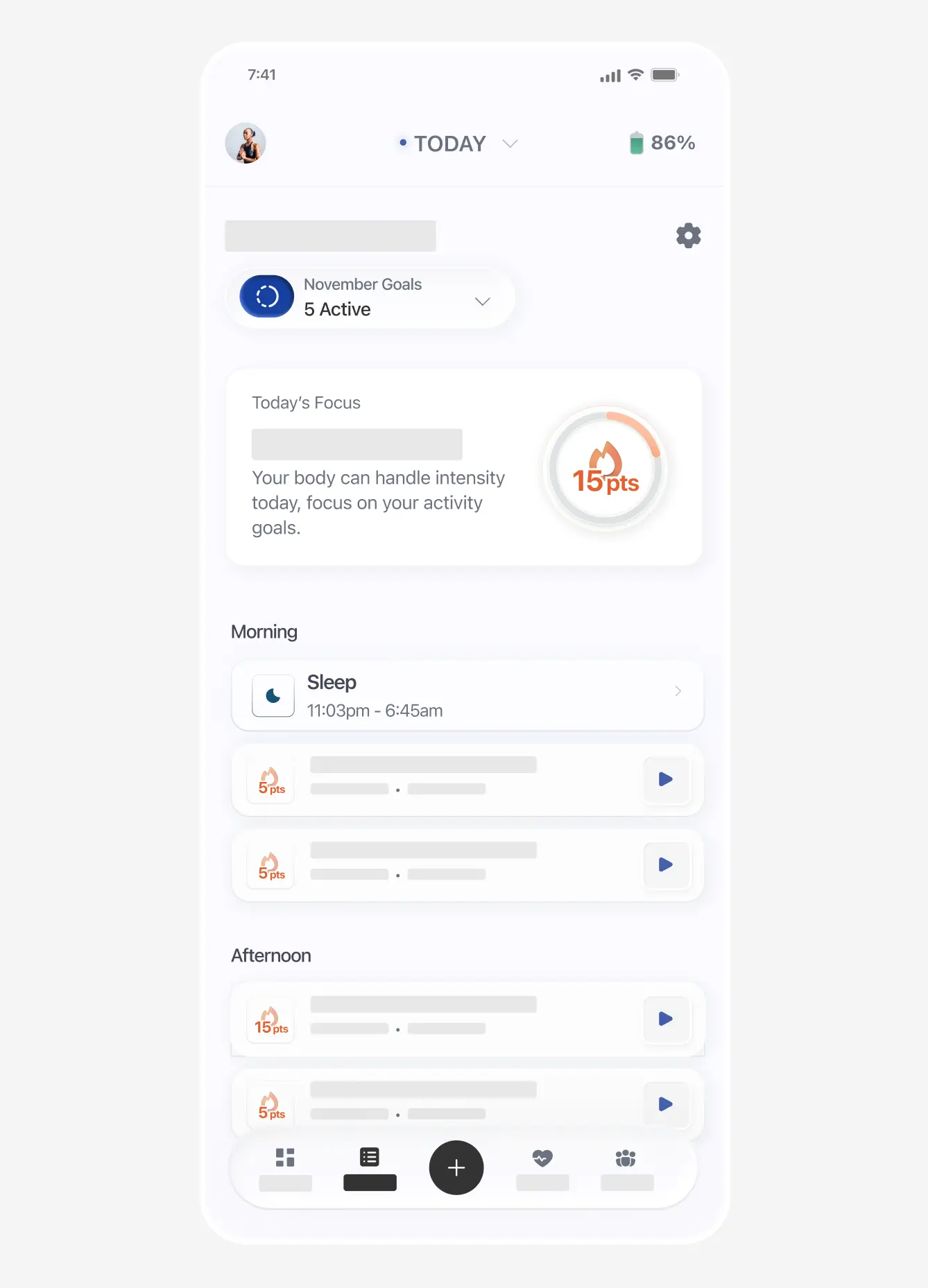
#2: Guided Action
Once users understand their current state, the experience shifts to action.
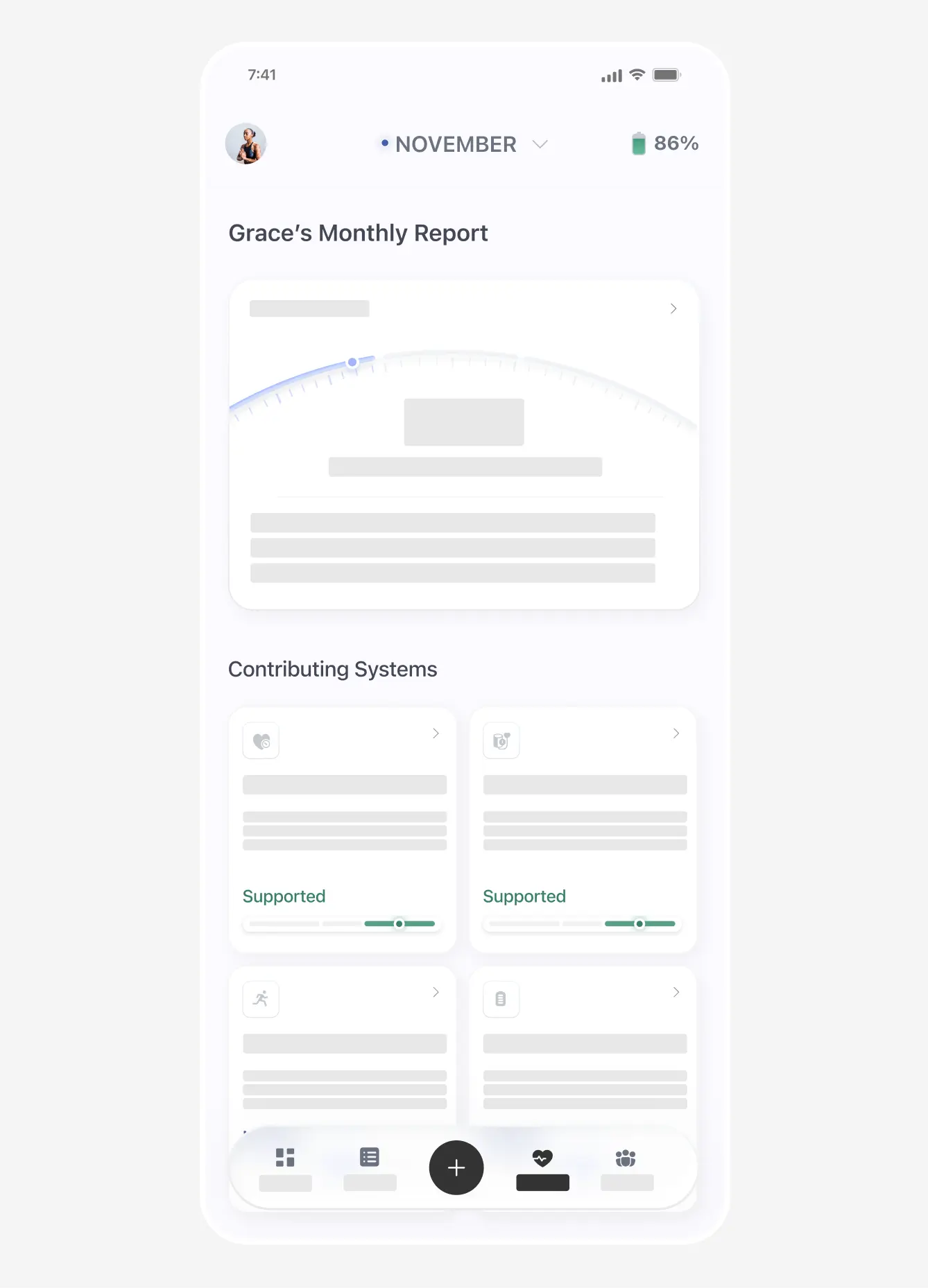
#3: Long-Term Direction
Shows whether daily behaviors are improving overall health trajectory over time
UI DESIGN
A clean, modern UI built to scale
The UI was designed to feel modern, calm, and clinical: supporting trust without feeling cold.
To support a lean internal team, I created:
A foundational component library
A lightweight, tokenized design system for color, type, spacing, and elevation
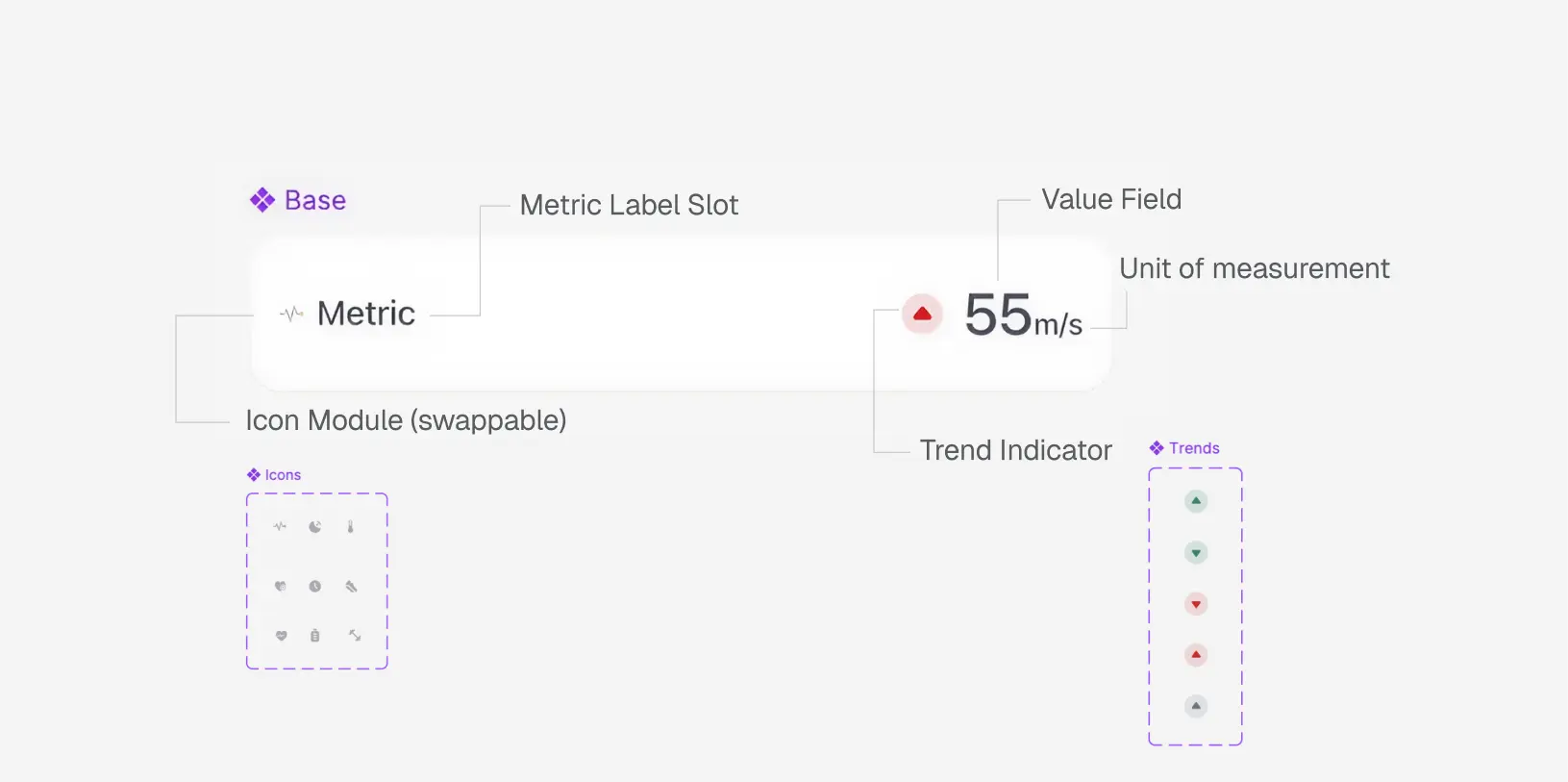
Reusable metric component with data inputs laid out for developers.
OUTCOMES
Established the Core Experience and System Framework
The work established the foundation for translating complex physiological data into a coherent consumer experience
Defined the product’s core experience model, aligning stakeholders around a clear and differentiated user journey
Created the signal hierarchy and system framework that shaped MVP scope and feature prioritization
Reframed the product direction from metric display to guided, preventive decision support
Delivered a scalable component and design system foundation for continued internal development
Informed product roadmap decisions by clarifying which experiences and signals provided the highest user value
Used in investor presentations and product storytelling, helping communicate the product vision clearly to external stakeholders

"When we first brought Megan on, the goal was polished screens for an investor demo. What we got was far more valuable. She pushed us to answer the hard product questions we had been avoiding and helped define what our product actually is."
James C
Founder/ CEO

"From a technical side, we were used to thinking in signals and models, not products. Megan helped translate our work into a system that made sense outside of a research context."
Aaron S
Founding Data Scientist