Redacted HealthTech Startup • Decision Support System Design
ROLE
Lead Product Designer & Strategist
TIMELINE
Q4 2025
SCOPE
Experience architecture, decision logic design, safety framework, UI Design
OVERVIEW
How do you help people act on personal health data every day
This case study is a focused deep dive into one core feature from the broader V1 product system. While the companion case study covers overall product architecture and signal hierarchy, this section zooms in on the execution layer: how system logic becomes a usable daily plan
I led the design of the guidance model, decision logic structure, and user experience that translate multiple inputs into a prioritized daily plan. Rather than asking users to interpret trends or decide what matters most, the system carries the burden of prioritization and presents a plan people can realistically follow.
Confidentiality note: This case study is shared with client approval. To respect the NDA, specific inputs, signals, and product visuals are generalized. I can share deeper detail in an interview.
PROBLEM
Why more data didn’t lead to better action
Early product concepts centered on metrics, summaries, and trends. While informative, these approaches still left users with the hardest part:
What should I focus on today?
What can wait?
What is realistic given how I feel right now?
Users didn’t struggle with access to information, they struggled with turning information into consistent, realistic action. More data did not reduce decision fatigue
The core design challenge: Design a system that decides what matters each day and supports users in acting consistently without overwhelming them.
STRATEGY & DIRECTION
Shifting from insight delivery to execution support
Because this feature was central to the V1 experience, its direction had significant impact on how the product would differentiate and deliver value.
To clarify the right direction, I led a focused research and framing phase to understand what actually supports sustained action in data-driven products:
Instead of providing more insights or optional tools, the system needed to take on the burden of prioritization. The feature’s value would come from deciding what matters today, not expanding what users could explore.
SYSTEM ARCHITECTURE
Designing the decision model behind the feature
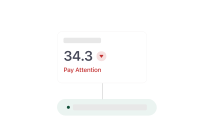
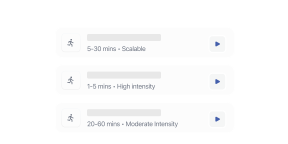
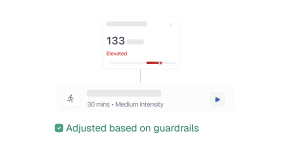
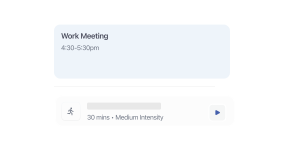
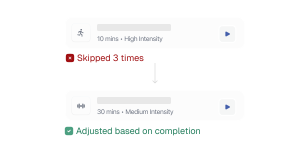
A simpler approach would have ranked possible actions using a single score. I chose a staged model instead, allowing longer-term direction, current state, safety constraints, and real-world context to influence guidance in layers rather than one formula
PERSONALIZATION
Using early interactions as system input, not setup burden
Because the feature adapts over time, early interactions were designed to function as system input rather than a traditional setup flow. Instead of requiring full configuration upfront, the experience gathers signals progressively to improve how guidance is prioritized and presented.
All inputs are optional to reduce friction and protect trust
THE EXPERIENCE
Turning system decisions into a usable daily plan
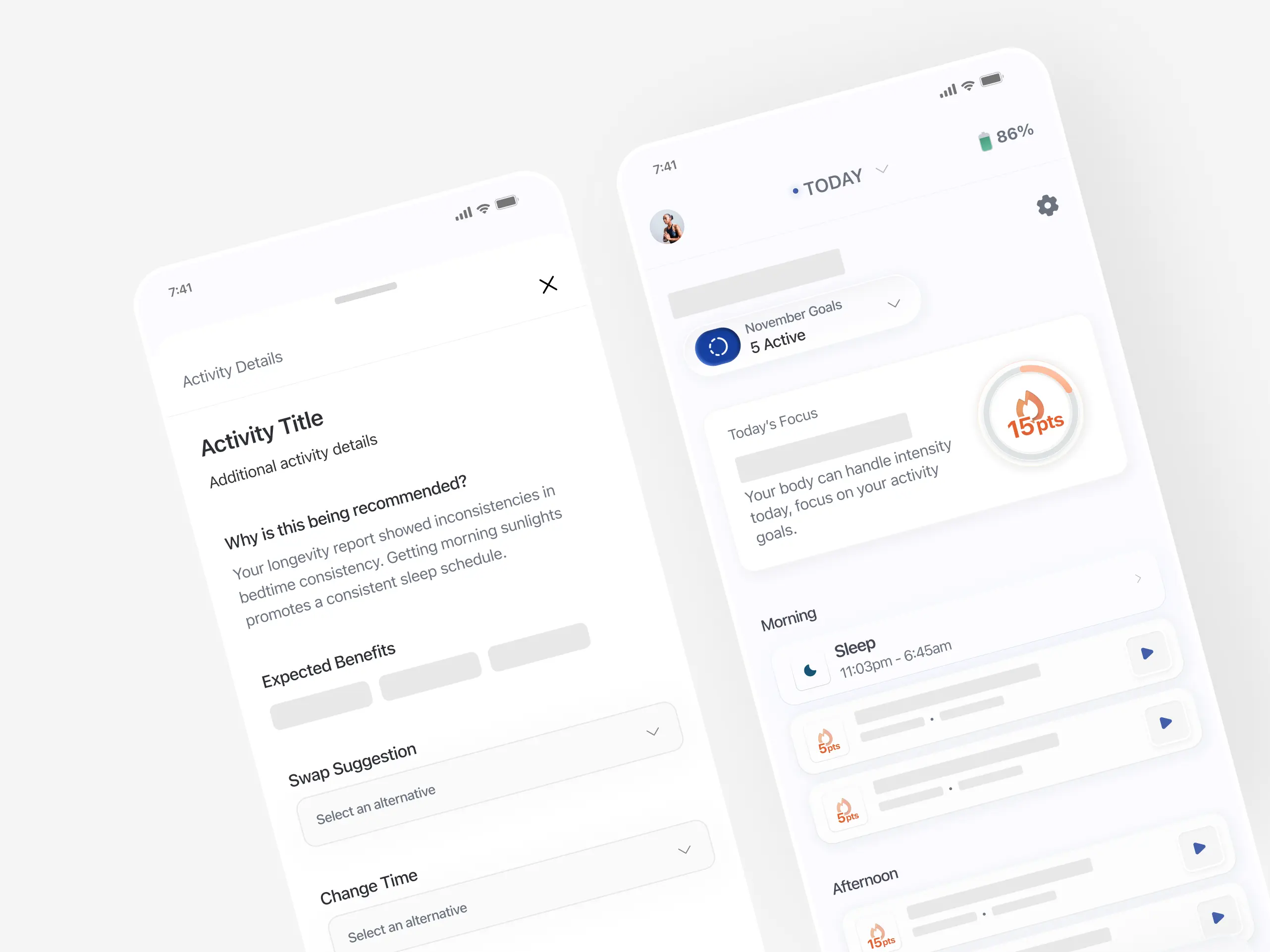
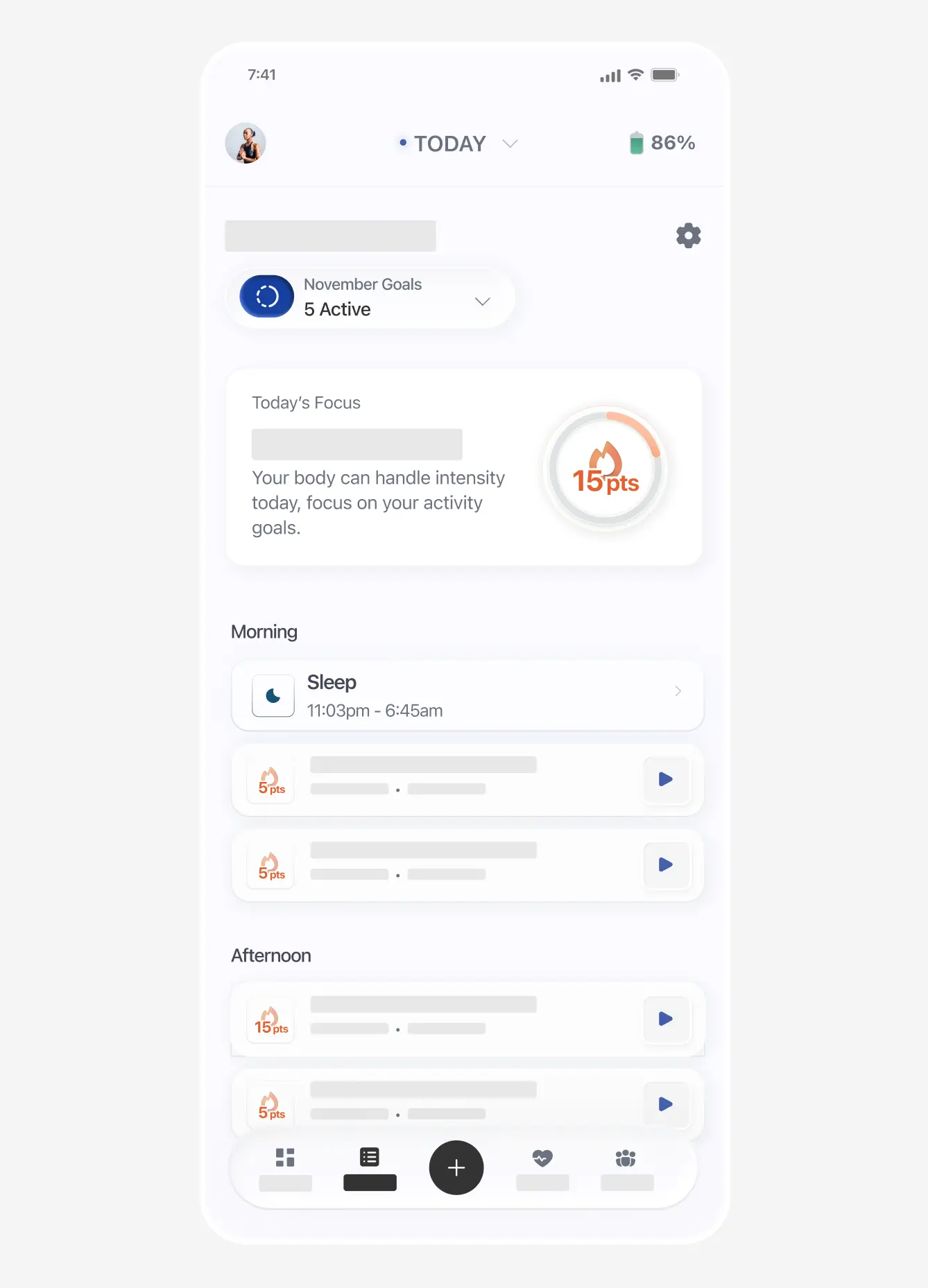
The guidance model operates behind the scenes, but its value depends on how clearly its decisions are communicated. The experience was designed to feel like a daily plan, not a task list. Guidance is prioritized, contextual, and flexible rather than exhaustive.
Where to focus today
A short, prioritized plan designed to be realistic for today.
The main view surfaces a small set of actions selected through the system’s evaluation.
Limiting the number of items was intentional, the goal was to reduce decision fatigue and make the plan feel achievable
Why this is recommended
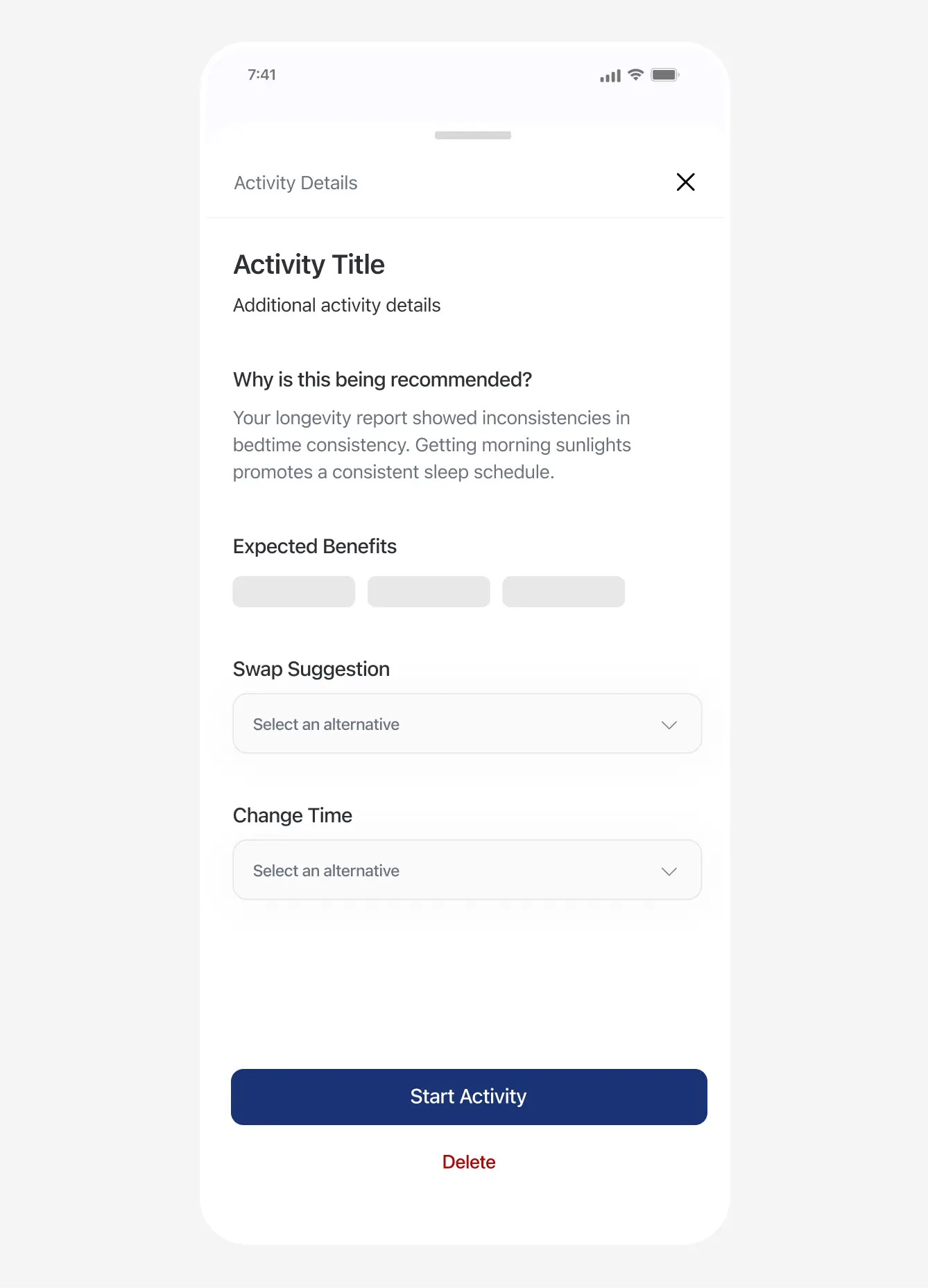
Each action includes a short explanation so users understand the reasoning without needing to interpret raw data.
The goal was transparency without exposing complexity.
UI DESIGN
Extending the V1 design system with reusable guidance components
This feature builds on the same UI system established in the broader V1 product case study. Rather than introducing a separate visual language, the work here extended the existing foundation with additional component patterns specific to the daily plan experience
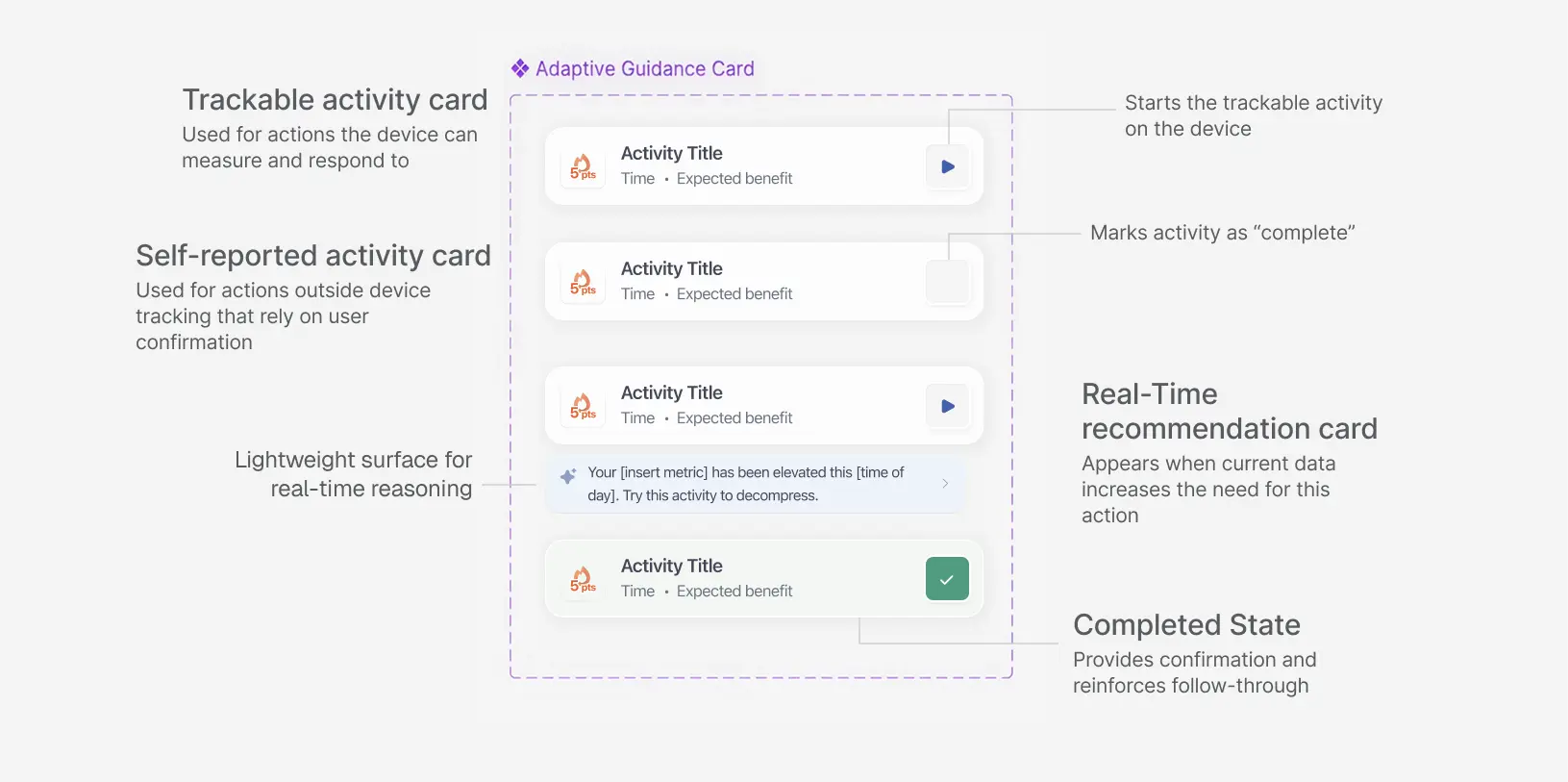
Here you can see four ways the same card appears: trackable activities, self-reported activities, recommendations based on current conditions, and completed actions.
OUTCOMES
Defined the feature that shaped the product’s core narrative
This work established how the V1 product would move users from passive data visibility to structured daily action. The guidance feature became a central part of how the product experience was communicated and understood, influencing both internal direction and external storytelling
Designed the multi-stage guidance model that governs how daily actions are prioritized, evaluated, and adapted
Defined how system decisions translate into user-facing guidance through interaction patterns and explanations
Established the structure for how personalization, safety constraints, and real-world context influence feature behavior
Created the foundation that enabled the feature to function as the product’s primary execution layer rather than a passive information display
Extended the existing UI system with reusable patterns specific to guidance presentation

"This feature became one of the biggest differentiators in our product, and Megan was the one who really defined it. It’s the part of the experience investors consistently respond to because it shows we’re doing more than tracking data, we’re helping people act on it."
James C
Founder/ CEO

"Megan is one of the sharpest product designers I’ve worked with. I was consistently impressed by how her thinking went beyond screens. She was always considering how the system should behave, how decisions should be structured, and how the UI could reflect that clearly."
Sean V
Engineer/ Former Garmin Dev