OneSkin • Mobile App Design 2024
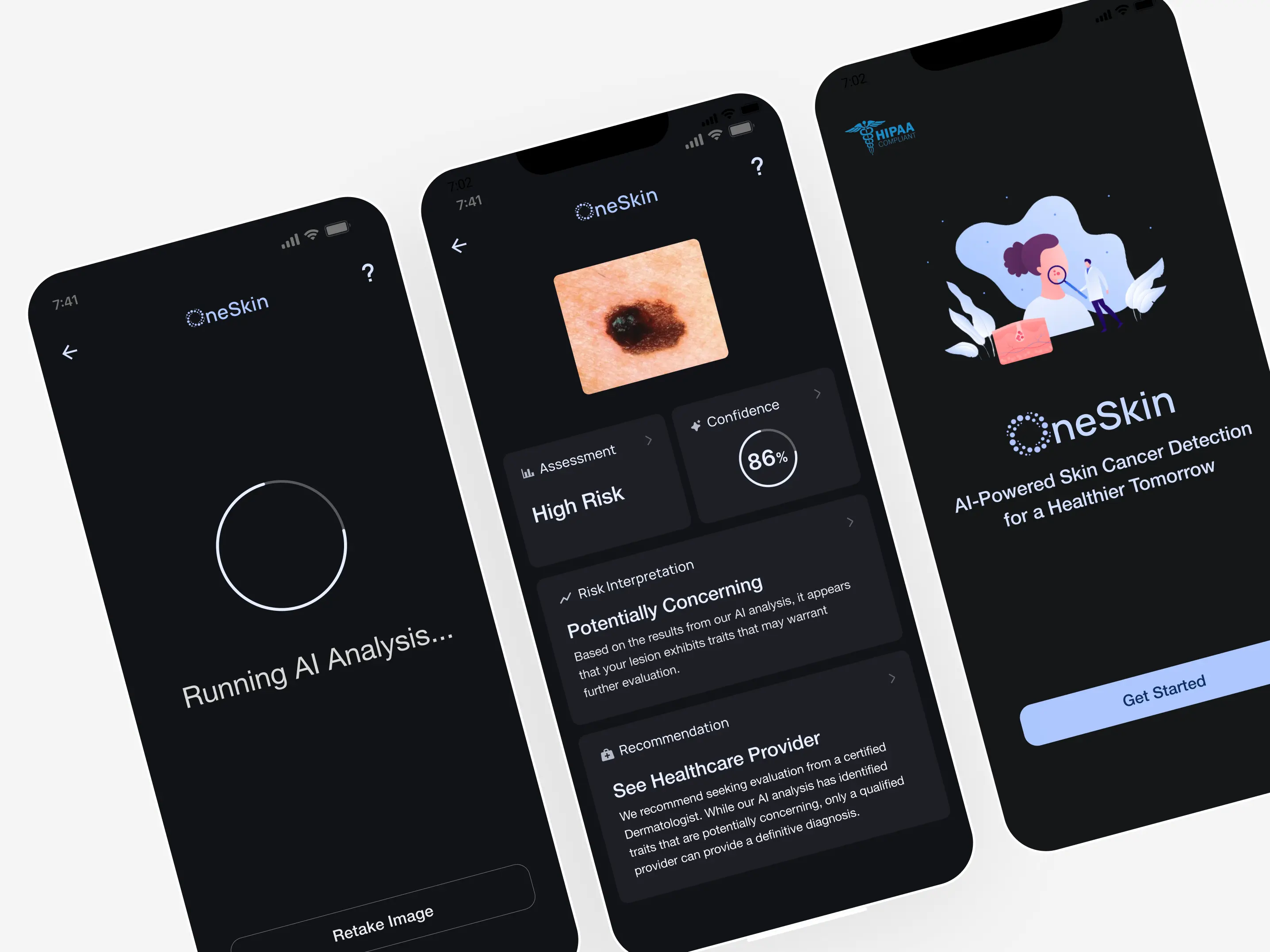
ROLE
Lead Product Designer & Strategist on a team of 3 engineers
TIMELINE
5 Days (Hackathon)
SCOPE
As the sole designer, I owned product framing, clinical alignment, and all UX decisions from concept through MVP
OVERVIEW
An AI-assisted triage tool designed to support referral decisions under clinical uncertainty
OneSkin explores a critical gap in AI healthcare products: translating probabilistic model outputs into safe, actionable guidance for real-world clinical decisions.
Rather than diagnosing melanoma, the system provides conservative risk signals and structured next steps designed to support referral decisions when certainty is low: the exact scenario that drives over-referral, system strain, and provider liability.
PROBLEM
Primary care lacks safe decision support when skin cancer risk is uncertain
Skin cancer triage doesn’t fail because clinicians lack detection knowledge. It fails when uncertainty is high and risk is unclear.
Under liability pressure, primary care physicians default to referral when unsure, even when malignancy (cancer) likelihood is low. This creates: system overload, delayed specialist access, and unnecessary procedures.
The missing piece is not better detection, it’s decision support for ambiguous cases.
SOLUTION
A patient-facing experience designed to support better upstream triage
A patient-facing experience that standardizes lesion image capture, communicates conservative risk signals, and supports virtual triage, without presenting diagnoses or false reassurance
STRATEGY & DIRECTION
Designing for real-world clinical decision-making
Conversations with two PCPs and two dermatologists showed that the core issue in skin cancer triage isn’t detection, it’s what to do when certainty is low. This shifted the product from an AI detection tool to a decision-support system.
These insights translated into three product principles that shaped every design decision:
SYSTEM ARCHITECTURE
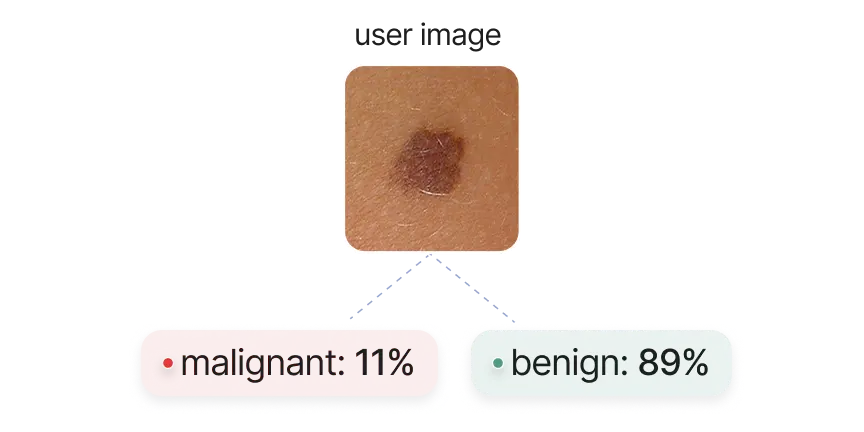
How raw AI predictions turn into safe guidance for real people
The main challenge wasn’t just building an image model, it was making sure the model’s output turned into something people could safely act on.
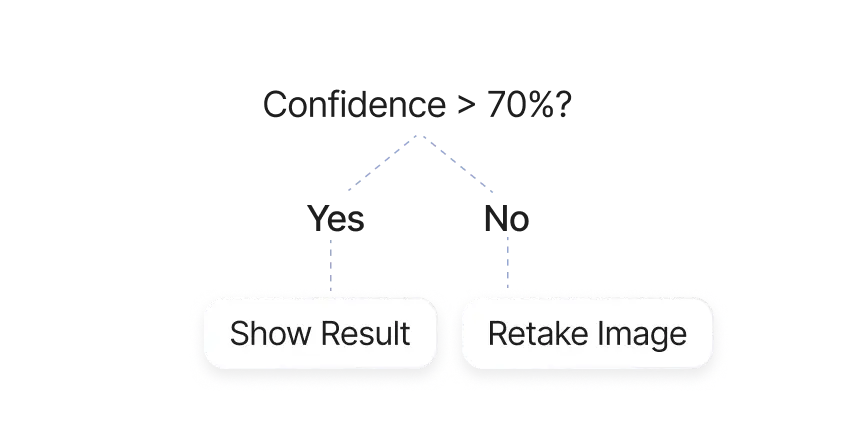
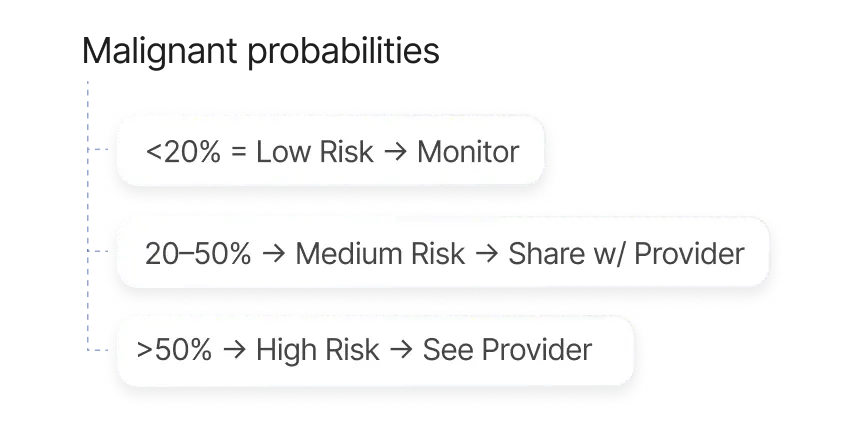
The system works in three steps:
DESIGN DECISIONS
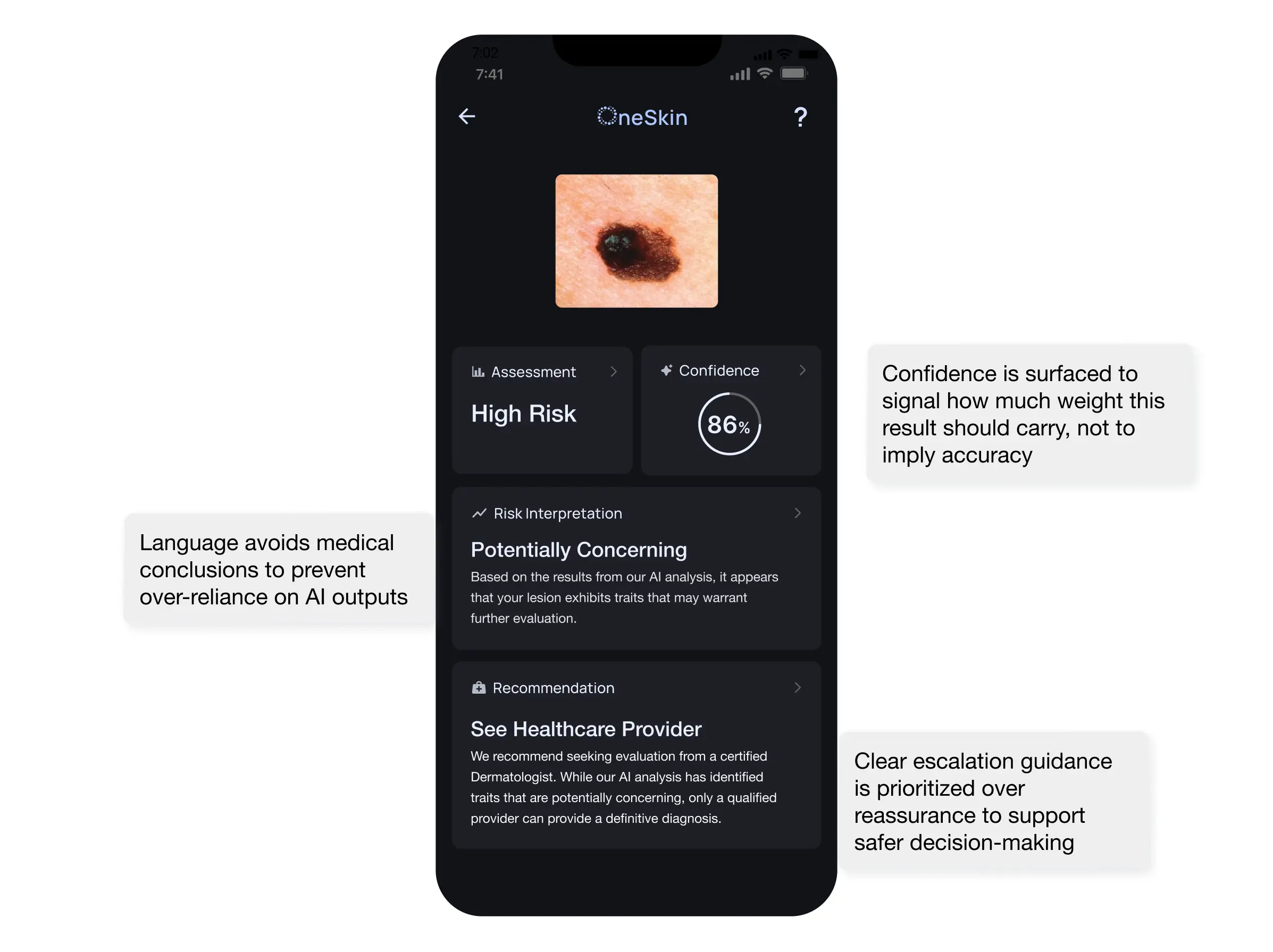
#1: Designing for interpretation, not reassurance
The results screen carries the highest risk in the entire product. Because of this, the goal of the results screen was not to deliver an answer, but to shape interpretation.
#2: Blocking low-quality signals before they become misleading outputs
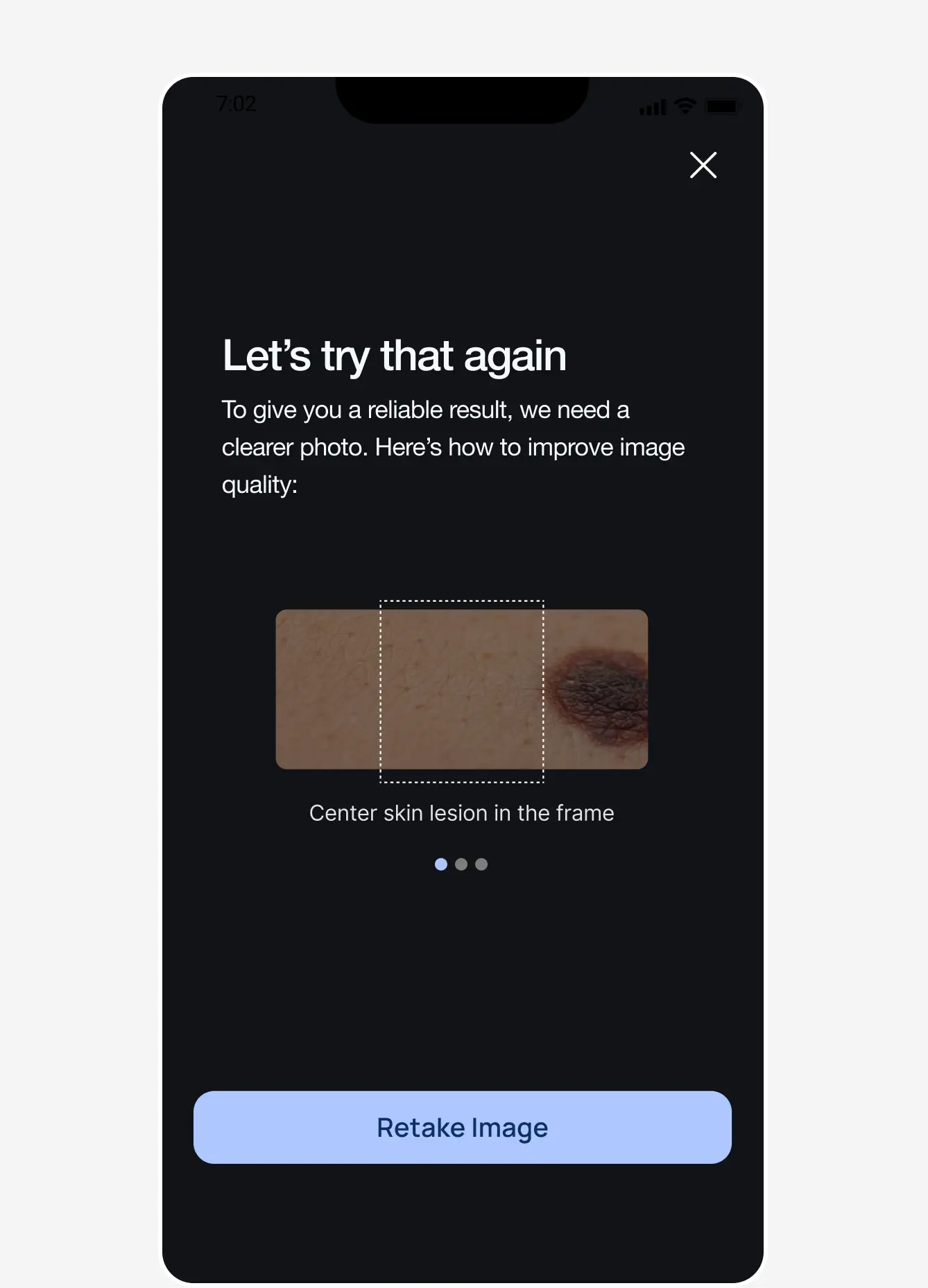
The system evaluates confidence before surfacing results
Below a minimum confidence threshold (~70%), the experience pauses
Users are prompted to retake the image rather than receiving a low-quality assessment
#3: Key Tradeoff: Patient-Facing Entry Point vs Full Provider Workflow
Rather than designing a full provider platform, I deliberately focused on the patient-facing intake and decision-translation layer.
This allowed us to validate the safety of risk framing, confidence gating, and conservative guidance (highest-risk part of the system) before expanding into complex clinical workflows.
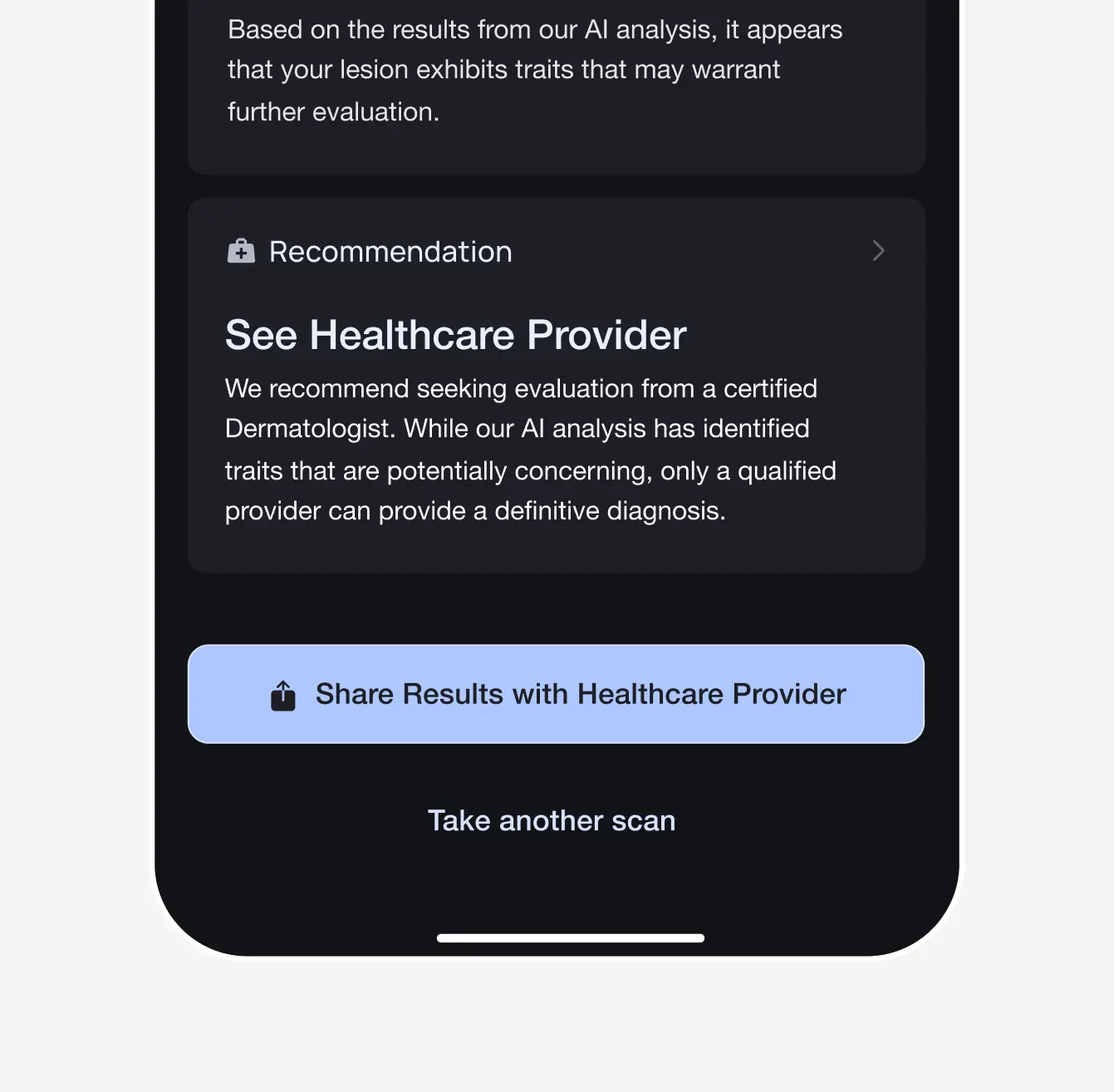
Current provider benefit: virtual triage
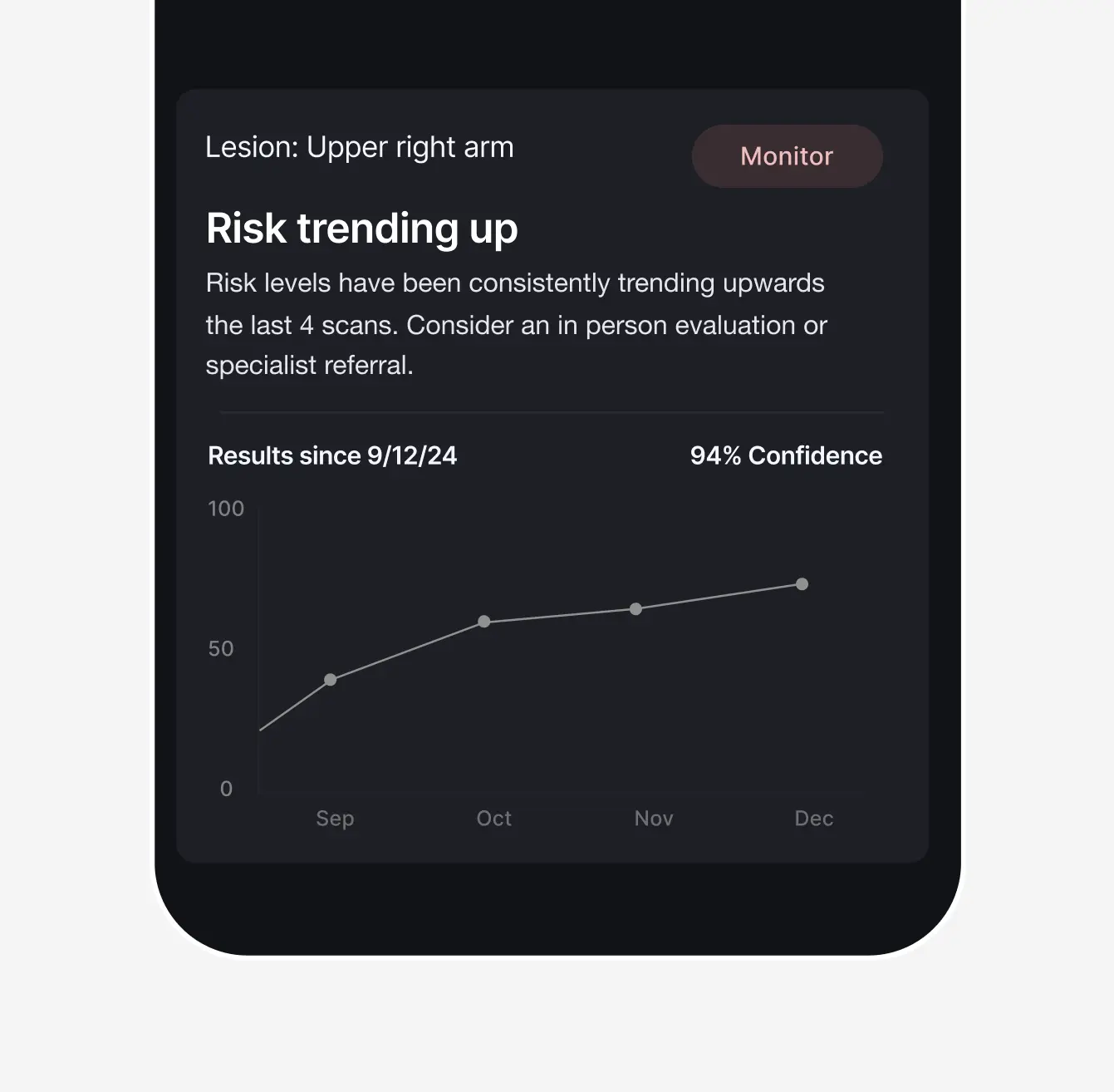
Future Direction: Dedicated Provider Experience
UI DESIGN
Designing the interface to reduce misinterpretation and bias
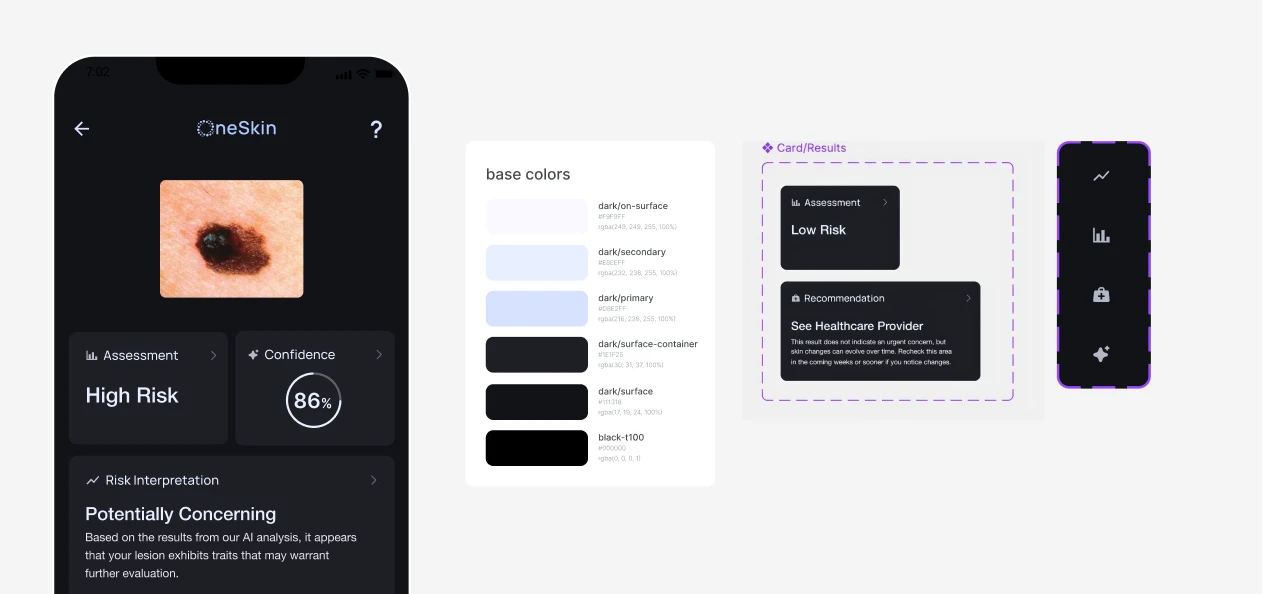
For this project, I intentionally built on Material Design as the foundation given the 5-day Flutter mobile development.
UI design extended beyond visuals into how information is framed, limited, and communicated because misinterpretation carried the highest risk. The interface was intentionally restrained to reduce cognitive bias and false reassurance.
OUTCOMES
Validated a safe, end-to-end decision-support MVP
Within five days, the team delivered a fully functional mobile MVP supporting image capture, confidence evaluation, conservative risk signaling, and provider sharing
Key Outcomes:
End-to-end validation of a patient-facing triage flow under uncertainty
Clinical review and feedback from two primary care physicians and two dermatologists
Top 5 finalist at Miami Hack Week
Most importantly, the project validated that conservative risk framing, retake flows, and non-diagnostic language were clinically acceptable and aligned with real-world triage decision-making.